I sit here at my desk, on a quiet Sunday morning. It's early, with the first rays of sunlight barely breaching the horizon. The world still sleeps. I am awake, sipping my freshly brewed coffee whilst deep in thought.
Another year around the sun. 42 laps.
I looked in the mirror just the other day and found the person looking back at me no longer possessed a youthful face, filled with vitality, fire in the eyes, and a head full of hair.
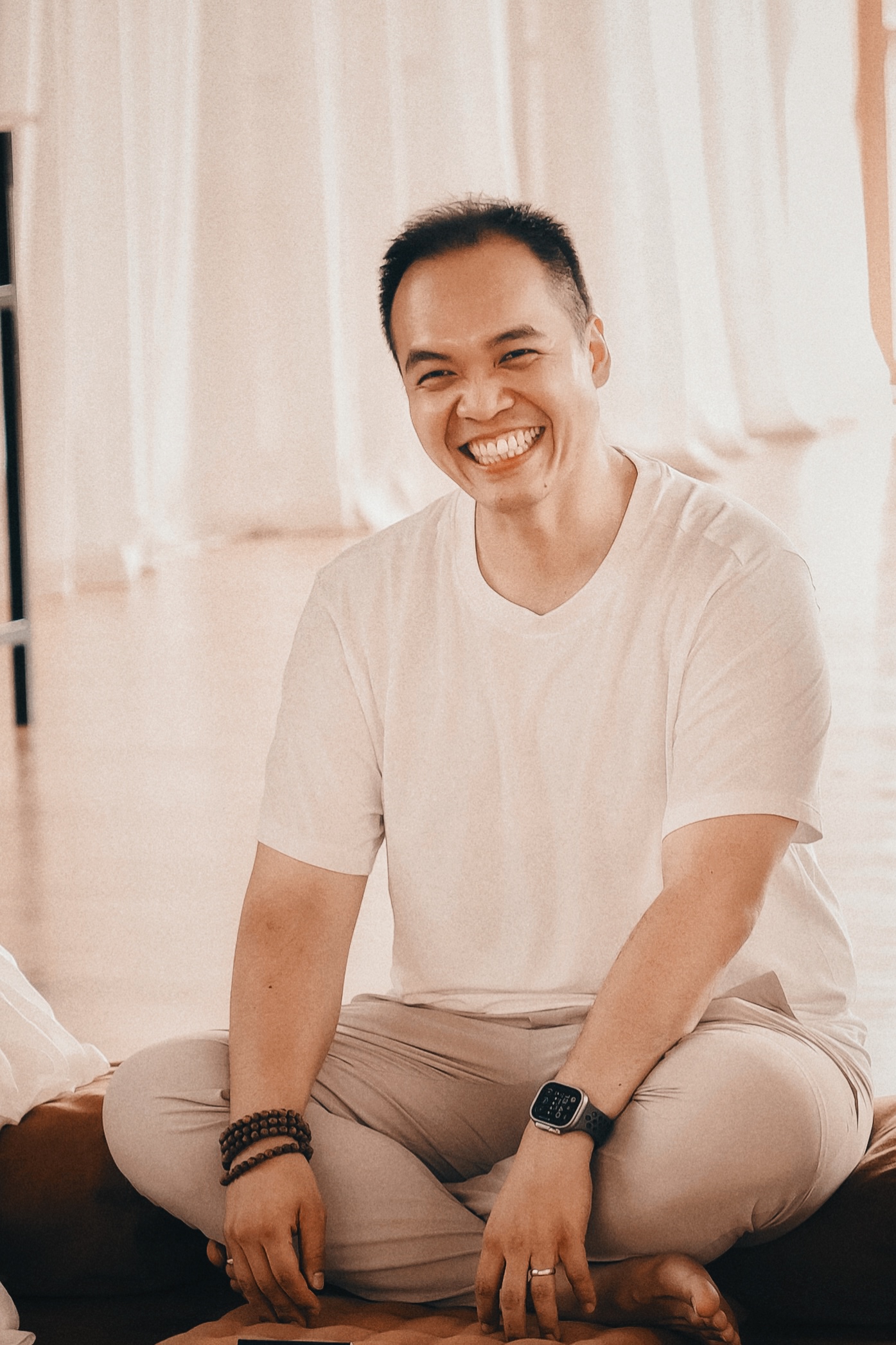
Instead, I saw a middle-aged man. Bags under tired eyes, wrinkles now beginning to form crow's feet. A head of thinning hair with what remains steadily turning white. And that unmistakeable sag to the face beginning to set in.
No longer young, yet I don't feel I've yet earned the title of "old" - though I suspect the youth would think otherwise.
I have reached that point in life now, where I can glimpse what lies on the other side of the hill.
It got me thinking. Here are my thoughts.
I. Getting Old is a Gift
Getting old is a gift.
The body can no longer do what it used to do, and the mind sometimes forgets. Things that were once trivial now present challenges. Yet things that once seemed insurmountable, now seem trivial.
This isn't comfortable if you've spent twenty years being the "youngest/first person in the room to do [X]". But it might be the most important thing you'll learn.
I know this because I spent the better part of two decades chasing milestones. At 25, I was managing a US$250M fund in Hong Kong, living in Mid-Levels, checking every box society had drawn up for me. The corner office. The disposable income. The prestige. I had climbed the mountain. The view from the top was supposed to be breathtaking.
It wasn't.
I remember a dive trip to the Philippines during that time. Four hours in a death van to a tiny jetty, then a small boat to Malapascua. Somewhere in that harrowing journey, we passed through a small town. And through the window, I watched children running and screaming in joyful play. Their parents sat on ancient plastic chairs, genuine smiles on their faces.
These people had nothing that modern society deemed necessary for comfort or happiness. And yet there it was: genuine happiness. Pure, uncomplicated joy.
I hadn't felt that in at least four or five years. Maybe longer.
But at 26, I didn't have the wisdom to articulate what I was seeing. I didn't have the words for why the sight of those children made something ache in my chest. I just knew something was wrong, filed it away, and went back to the office to hit my next target.
Six years later, at 32, I quit Private Equity. Then finance altogether. I'd finally admitted that no amount of success in that world could fill the growing resentment and emptiness. I was physically and mentally wrecked. I knew the system was broken, but I still didn't understand why I felt so hollow despite achieving everything I'd set out to achieve.
Fast forward to 2023, at 39. My EdTech startup - something I'd poured everything into - was stolen from me. Financial resources exhausted. Energy depleted. Mental reserves empty. Another failure to reach the milestone. Another summit that turned out to be a false peak.
I was broken.
My wife pointed out all the things I'd missed. Every small win I'd stepped over on the way to the next target.
She reminded me about the young boy with cerebral palsy. At a school sports day, during a race event, both his teacher and his worried parents offered to step in and help. He declined. "I can do this," he said. "I have perseverance."
He'd learned that word - that concept - directly from our app. Something our platform had helped his teachers recognise and develop in him.
That was a milestone. A real one.
But because it wasn't my milestone - because it wasn't a funding round or an acquisition - I couldn't see it. I'd dismissed it as "just the work" and kept grinding towards the destination that never came.
At 40, I finally had the maturity and emotional vocabulary to understand what I'd been missing all along. What I'd neglected, what I'd chosen not to see, and the lies I'd told myself.
II. The Paradox of High Performance
The traits that make you successful are the same traits that blind you to what matters.
Your ability to delay gratification, to suffer for future rewards, to keep your eyes on the prize - these get you to 25 with a US$250M fund. They get you the corner office, the accolades, the achievements.
But they also train you to dismiss the present moment as merely the price you pay for the future. The journey becomes something to endure, not something to experience. You develop tunnel vision so acute you can spot a target on the distant horizon but miss the miracle happening right in front of you.
A child with cerebral palsy learning perseverance? That's just Tuesday. That's just the grind. Wake me up when we hit our user growth targets.
This is the trap. And ageing - if you let it - is what finally springs you free.
III. The Gift of Perspective
As we age, the loud chatter of youth fades and softens - and not all of it due to age-related hearing loss. The world is now perceived through a kind of noise-cancelling filter of wisdom. Less noise, more poise.
What changes isn't the world. It's your ability to see it clearly.
In your twenties and thirties, you're convinced the next achievement will finally be enough. The next promotion. The next funding round. The next exit. You tell yourself you'll slow down after this one, you'll appreciate things after this one, you'll finally be happy after this one.
But "after this one" never comes. The goalpost moves the moment you reach it. This is how high performers operate. It's how we're wired.
Ageing gives you something youth cannot: the perspective to see the pattern. You've reached enough summits to know the view from the top never quite matches what you imagined. You've hit enough targets to realise the satisfaction evaporates almost immediately, replaced by the restless hunger for the next one.
And somewhere in your forties - if you're lucky, if you're paying attention - you start to suspect you've been asking the wrong question all along.
Perhaps the question should be:
"What am I missing right now while I'm chasing what's next?"
IV. Life Between the Milestones
The chase for novelty, that sprint for newness, slows down to a steady walk, giving time and space to appreciate the fleeting moments: this morning's perfect sunrise, imperceptible from yesterday's perfect sunrise, yet undiminished for it.
Life is a journey of a thousand miles. And when you realise that life is lived in the journey between the milestones and not the destination, you will see the beauty in slowing down and being present as you take your steps - or you'll spend your life walking someone else's path.
This isn't some platitude about stopping to smell the roses. This is a fundamental reorientation of how you measure a life well-lived.
For high performers, this realisation is both liberating and terrifying.
Terrifying because it means all those years of sacrifice, of delayed gratification, of suffering for the summit - they weren't leading somewhere better. They were just leading to the next sacrifice, the next delay, the next summit.
Liberating because it also means you haven't actually wasted those years. The real life - the actual living - was happening the whole time. You just couldn't see it.
The late nights grinding on pitch decks weren't just a means to an exit; they were your life, happening in real time. The frustrated meetings with difficult stakeholders weren't obstacles to overcome on the way to success; they were the actual texture of your existence.
And that child learning perseverance? That wasn't a nice side effect of your business. That was the entire fucking point.
The journey between milestones is where relationships deepen. Where skills develop. Where character forms. Where the person you're becoming actually becomes.
The milestones themselves? They are nothing but arbitrary markers we place along the path to convince ourselves we're making progress. But the path itself - that's where life happens.
V. The Shift in Gravity
Where once the opinions of others shaped you, now your opinions shape others. So take care when sharing your thoughts. And remember, silence is your friend - for not everything deserves a reply.
In youth, you're constantly looking outward for validation. What do they think? Did I impress them? Am I measuring up? You shape yourself according to external expectations, trying to fit the mould of what success is supposed to look like.
But somewhere along the way - usually after you've achieved enough external success to realise it doesn't actually change how you feel about yourself - the gravity shifts.
You stop performing for an audience. You start living from your centre.
This doesn't mean you become arrogant or dismissive. Quite the opposite. It means you finally have enough self-knowledge to discern which opinions actually matter and which are just noise. You develop the confidence to stay silent when the younger you would have felt compelled to prove something.
You realise your words now carry weight - not because you're more important, but because you've lived long enough to have earned perspective. So you use them more carefully.
You learn that not every provocation deserves a response. That sometimes the most powerful thing you can do is simply not engage. That silence isn't weakness - it's the ultimate expression of self-possession.
VI. The Long View
Know that nothing lasts forever: you will face good times and bad times. One cannot exist without the other. So recognise your blessings - no matter how large or small - and appreciate every moment.
When you're young and hungry, you catastrophise failures and inflate successes. Every setback feels permanent. Every win feels like validation of your entire existence.
Ageing gives you the long view.
You've lived through enough cycles now to know that this too shall pass - both the good, and the bad. You've had startups stolen from you and somehow survived. You've hit rock bottom and discovered it had a trampoline. You've achieved everything you wanted and felt empty, then lost everything and found strange peace.
The oscillation between good times and bad times stops feeling quite so dramatic. Not because you've become numb, but because you've developed trust in your own resilience.
You know you'll figure it out. You always have.
This isn't resignation. It's a deeper form of confidence. One built not on the unstable foundation of achievement, but on the solid ground of self-knowledge.
And with this long view comes gratitude. Not the performative kind you post on social media, but the quiet recognition that you've been absurdly, impossibly lucky in ways large and small.
Lucky to have a wife who points out the milestones you missed. Lucky to have learned about perseverance from a child you helped. Lucky to have failed enough times to know failure isn't fatal.
Lucky to be ageing, which means you're still here.
VII. The Final Gift of Forgiveness
And finally, learn to forgive. Not because they deserve it, but because you do. Forgive your enemies. Forgive your parents. Forgive yourself.
This might be the hardest lesson ageing teaches, and the most essential.
You carry so much. Resentments about opportunities that didn't pan out. Anger at people who wronged you. Disappointment in yourself for not being further along, for not achieving more, for wasting time on the wrong things.
These weights accumulate over years. At some point, you have to make a choice: keep carrying them, or put them down.
Forgiveness isn't about condoning what happened. It's not about forgetting, or pretending everything's fine. It's about refusing to let the past continue poisoning your present.
Forgive the people who stole your startup. Not because what they did was acceptable, but because carrying that rage around is only hurting you.
Forgive your parents for not being perfect. They were just people, doing their best with the tools they had, carrying their own wounds from their own imperfect parents.
Forgive yourself for all the years you spent chasing the wrong things. You were doing the best you could with the awareness you had at the time. And besides, those years weren't wasted - they were necessary. They brought you here, to this understanding, to this moment of clarity.
You couldn't have learned any of this without living through it.
VIII. A Closing
Let me share one of my favourite quotes. It's by David Bowie:
"Ageing is an extraordinary process whereby you become the person you always should have been."
I used to think this meant you eventually achieve your potential, become your best self, reach your "final form".
But I understand it differently now.
Ageing isn't about becoming someone better. It's about finally becoming yourself. Stripped of all the performances, all the borrowed ambitions, all the should-be's and supposed-to's, until what remains is just... you.
The person who can watch a sunrise without needing it to mean something.
The person who can celebrate a child learning perseverance without needing it to validate a business model.
The person who can look in the mirror and see the wrinkles, the thinning hair, the sag setting in, and think: this face has been earned.
Getting old is a gift.
Not despite the declining body and occasional forgetfulness, but because of them. Because they remind you that time is finite, that this moment is all you have, that the journey between milestones is the only journey there is.
The mountain you've been climbing your whole life? It doesn't have a summit.
It never did.
But the view along the way - if you'd just stop and look - is extraordinary.
About the Author